•  
XINHUA PHOTOS OF THE DAY

XINHUA PHOTOS OF THE DAY

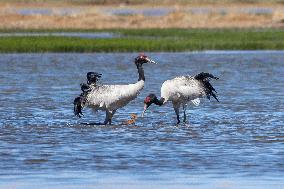
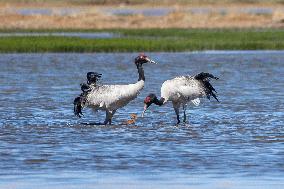
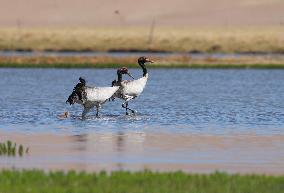
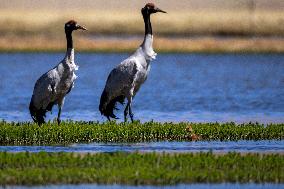
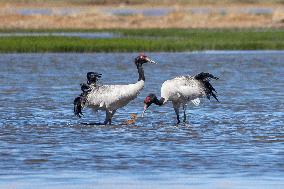
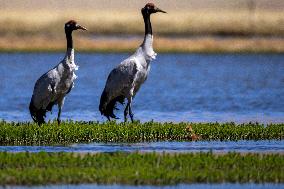
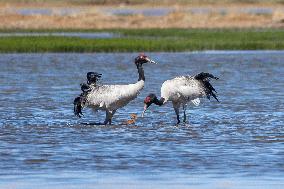
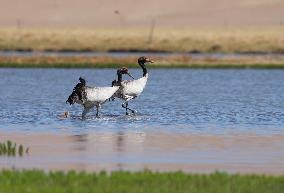
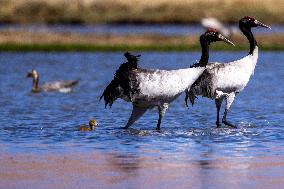
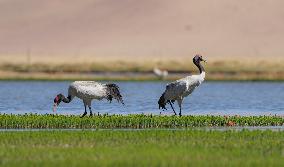
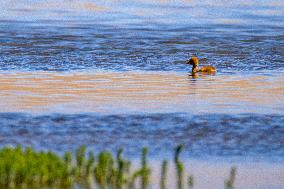
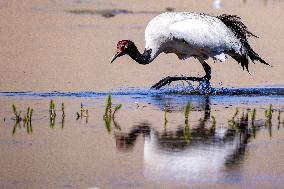
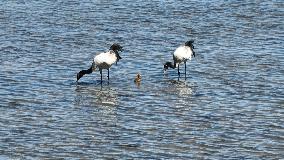
(240611) -- BEIJING, June 11, 2024 Photo by Xinhua/ABACAPRESS.COM) -- Two black-necked cranes and their baby are seen at a wetland in Xainza County of Nagqu City, southwest China's Xizang Autonomous Region, June 9, 2024. Black-necked crane couples are breeding babies in wetlands at an altitude of about 4,700 meters in Xainza County. Every year around the time of June, pairs of black-necked cranes migrate to Xainza County to hatch eggs on grass piers surrounded by water. The black-necked crane, a species under first-class state protection in China, mainly inhabits plateau meadows and marshes at an altitude of 2,500 to 5,000 meters. Photo by Xinhua/ABACAPRESS.COM/Tenzing Nima Qadhup)

  •  
XINHUA PHOTOS OF THE DAY

XINHUA PHOTOS OF THE DAY

(240611) -- BEIJING, June 11, 2024 (Xinhua) -- Two black-necked cranes and their baby are seen at a wetland in Xainza County of Nagqu City, southwest China's Xizang Autonomous Region, June 9, 2024. Black-necked crane couples are breeding babies in wetlands at an altitude of about 4,700 meters in Xainza County. Every year around the time of June, pairs of black-necked cranes migrate to Xainza County to hatch eggs on grass piers surrounded by water. The black-necked crane, a species under first-class state protection in China, mainly inhabits plateau meadows and marshes at an altitude of 2,500 to 5,000 meters. (Xinhua/Tenzing Nima Qadhup)

  •  
(InXizang)CHINA-XIZANG-XAINZA-BLACK-NECKED CRANE BABY (CN)

(InXizang)CHINA-XIZANG-XAINZA-BLACK-NECKED CRANE BABY (CN)

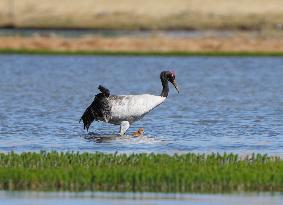
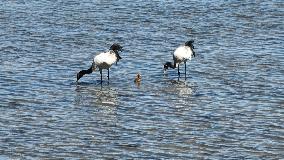
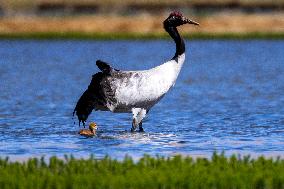
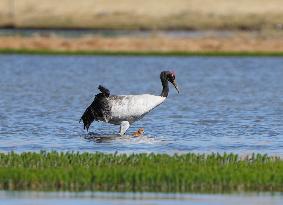
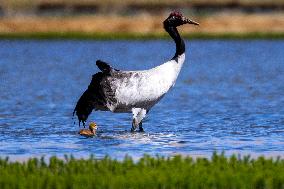
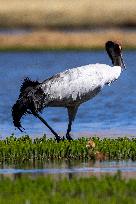
(240610) -- LHASA, June 10, 2024 Photo by Xinhua/ABACAPRESS.COM) -- A black-necked crane and its baby are seen at a wetland in Xainza County of Nagqu City, southwest China's Xizang Autonomous Region, June 9, 2024. Black-necked crane couples are breeding babies in wetlands at an altitude of about 4,700 meters in Xainza County. Every year around the time of June, pairs of black-necked cranes migrate to Xainza County to hatch eggs on grass piers surrounded by water. The black-necked crane, a species under first-class state protection in China, mainly inhabits plateau meadows and marshes at an altitude of 2,500 to 5,000 meters. Photo by Xinhua/ABACAPRESS.COM/Tenzing Nima Qadhup)

  •  
(InXizang)CHINA-XIZANG-XAINZA-BLACK-NECKED CRANE BABY (CN)

(InXizang)CHINA-XIZANG-XAINZA-BLACK-NECKED CRANE BABY (CN)

(240610) -- LHASA, June 10, 2024 Photo by Xinhua/ABACAPRESS.COM) -- A black-necked crane and its baby are seen at a wetland in Xainza County of Nagqu City, southwest China's Xizang Autonomous Region, June 9, 2024. Black-necked crane couples are breeding babies in wetlands at an altitude of about 4,700 meters in Xainza County. Every year around the time of June, pairs of black-necked cranes migrate to Xainza County to hatch eggs on grass piers surrounded by water. The black-necked crane, a species under first-class state protection in China, mainly inhabits plateau meadows and marshes at an altitude of 2,500 to 5,000 meters. Photo by Xinhua/ABACAPRESS.COM/Jiang Fan)

  •  
(InXizang)CHINA-XIZANG-XAINZA-BLACK-NECKED CRANE BABY (CN)

(InXizang)CHINA-XIZANG-XAINZA-BLACK-NECKED CRANE BABY (CN)

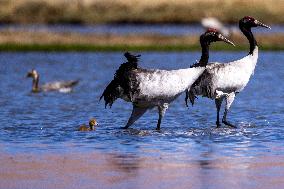
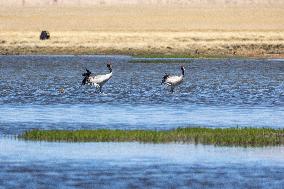
(240610) -- LHASA, June 10, 2024 Photo by Xinhua/ABACAPRESS.COM) -- Two black-necked cranes and their baby are seen at a wetland in Xainza County of Nagqu City, southwest China's Xizang Autonomous Region, June 9, 2024. Black-necked crane couples are breeding babies in wetlands at an altitude of about 4,700 meters in Xainza County. Every year around the time of June, pairs of black-necked cranes migrate to Xainza County to hatch eggs on grass piers surrounded by water. The black-necked crane, a species under first-class state protection in China, mainly inhabits plateau meadows and marshes at an altitude of 2,500 to 5,000 meters. Photo by Xinhua/ABACAPRESS.COM/Jigme Dorje)

  •  
(InXizang)CHINA-XIZANG-XAINZA-BLACK-NECKED CRANE BABY (CN)

(InXizang)CHINA-XIZANG-XAINZA-BLACK-NECKED CRANE BABY (CN)

(240610) -- LHASA, June 10, 2024 Photo by Xinhua/ABACAPRESS.COM) -- A black-necked crane and its baby are seen at a wetland in Xainza County of Nagqu City, southwest China's Xizang Autonomous Region, June 9, 2024. Black-necked crane couples are breeding babies in wetlands at an altitude of about 4,700 meters in Xainza County. Every year around the time of June, pairs of black-necked cranes migrate to Xainza County to hatch eggs on grass piers surrounded by water. The black-necked crane, a species under first-class state protection in China, mainly inhabits plateau meadows and marshes at an altitude of 2,500 to 5,000 meters. Photo by Xinhua/ABACAPRESS.COM/Jigme Dorje)

  •  
(InXizang)CHINA-XIZANG-XAINZA-BLACK-NECKED CRANE BABY (CN)

(InXizang)CHINA-XIZANG-XAINZA-BLACK-NECKED CRANE BABY (CN)

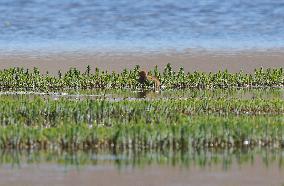
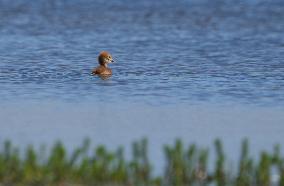
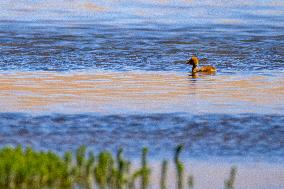
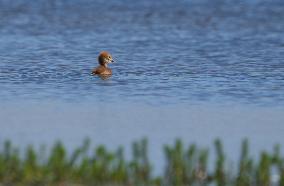
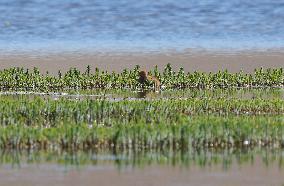
(240610) -- LHASA, June 10, 2024 Photo by Xinhua/ABACAPRESS.COM) -- A black-necked crane baby is seen at a wetland in Xainza County of Nagqu City, southwest China's Xizang Autonomous Region, June 9, 2024. Black-necked crane couples are breeding babies in wetlands at an altitude of about 4,700 meters in Xainza County. Every year around the time of June, pairs of black-necked cranes migrate to Xainza County to hatch eggs on grass piers surrounded by water. The black-necked crane, a species under first-class state protection in China, mainly inhabits plateau meadows and marshes at an altitude of 2,500 to 5,000 meters. Photo by Xinhua/ABACAPRESS.COM/Jigme Dorje)

  •  
(InXizang)CHINA-XIZANG-XAINZA-BLACK-NECKED CRANE BABY (CN)

(InXizang)CHINA-XIZANG-XAINZA-BLACK-NECKED CRANE BABY (CN)

(240610) -- LHASA, June 10, 2024 Photo by Xinhua/ABACAPRESS.COM) -- Two black-necked cranes and their baby are seen at a wetland in Xainza County of Nagqu City, southwest China's Xizang Autonomous Region, June 9, 2024. Black-necked crane couples are breeding babies in wetlands at an altitude of about 4,700 meters in Xainza County. Every year around the time of June, pairs of black-necked cranes migrate to Xainza County to hatch eggs on grass piers surrounded by water. The black-necked crane, a species under first-class state protection in China, mainly inhabits plateau meadows and marshes at an altitude of 2,500 to 5,000 meters. Photo by Xinhua/ABACAPRESS.COM/Jiang Fan)

  •  
(InXizang)CHINA-XIZANG-XAINZA-BLACK-NECKED CRANE BABY (CN)

(InXizang)CHINA-XIZANG-XAINZA-BLACK-NECKED CRANE BABY (CN)

(240610) -- LHASA, June 10, 2024 Photo by Xinhua/ABACAPRESS.COM) -- A black-necked crane baby is seen at a wetland in Xainza County of Nagqu City, southwest China's Xizang Autonomous Region, June 9, 2024. Black-necked crane couples are breeding babies in wetlands at an altitude of about 4,700 meters in Xainza County. Every year around the time of June, pairs of black-necked cranes migrate to Xainza County to hatch eggs on grass piers surrounded by water. The black-necked crane, a species under first-class state protection in China, mainly inhabits plateau meadows and marshes at an altitude of 2,500 to 5,000 meters. Photo by Xinhua/ABACAPRESS.COM/Jigme Dorje)

  •  
(InXizang)CHINA-XIZANG-XAINZA-BLACK-NECKED CRANE BABY (CN)

(InXizang)CHINA-XIZANG-XAINZA-BLACK-NECKED CRANE BABY (CN)

(240610) -- LHASA, June 10, 2024 Photo by Xinhua/ABACAPRESS.COM) -- Two black-necked cranes and their baby are seen at a wetland in Xainza County of Nagqu City, southwest China's Xizang Autonomous Region, June 9, 2024. Black-necked crane couples are breeding babies in wetlands at an altitude of about 4,700 meters in Xainza County. Every year around the time of June, pairs of black-necked cranes migrate to Xainza County to hatch eggs on grass piers surrounded by water. The black-necked crane, a species under first-class state protection in China, mainly inhabits plateau meadows and marshes at an altitude of 2,500 to 5,000 meters. Photo by Xinhua/ABACAPRESS.COM/Jigme Dorje)

  •  
(InXizang)CHINA-XIZANG-XAINZA-BLACK-NECKED CRANE BABY (CN)

(InXizang)CHINA-XIZANG-XAINZA-BLACK-NECKED CRANE BABY (CN)

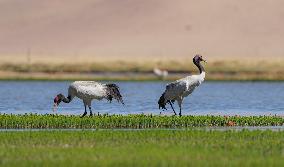
(240610) -- LHASA, June 10, 2024 Photo by Xinhua/ABACAPRESS.COM) -- Two black-necked cranes and their baby are seen at a wetland in Xainza County of Nagqu City, southwest China's Xizang Autonomous Region, June 9, 2024. Black-necked crane couples are breeding babies in wetlands at an altitude of about 4,700 meters in Xainza County. Every year around the time of June, pairs of black-necked cranes migrate to Xainza County to hatch eggs on grass piers surrounded by water. The black-necked crane, a species under first-class state protection in China, mainly inhabits plateau meadows and marshes at an altitude of 2,500 to 5,000 meters. Photo by Xinhua/ABACAPRESS.COM/Jiang Fan)

  •  
(InXizang)CHINA-XIZANG-XAINZA-BLACK-NECKED CRANE BABY (CN)

(InXizang)CHINA-XIZANG-XAINZA-BLACK-NECKED CRANE BABY (CN)

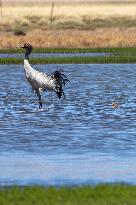
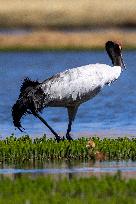
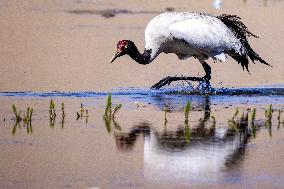
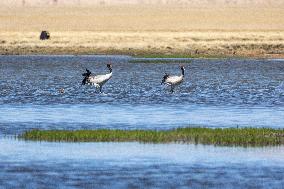
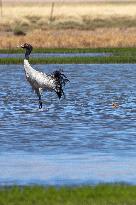
(240610) -- LHASA, June 10, 2024 Photo by Xinhua/ABACAPRESS.COM) -- A black-necked crane forages at a wetland in Xainza County of Nagqu City, southwest China's Xizang Autonomous Region, June 9, 2024. Black-necked crane couples are breeding babies in wetlands at an altitude of about 4,700 meters in Xainza County. Every year around the time of June, pairs of black-necked cranes migrate to Xainza County to hatch eggs on grass piers surrounded by water. The black-necked crane, a species under first-class state protection in China, mainly inhabits plateau meadows and marshes at an altitude of 2,500 to 5,000 meters. Photo by Xinhua/ABACAPRESS.COM/Jiang Fan)

  •  
(InXizang)CHINA-XIZANG-XAINZA-BLACK-NECKED CRANE BABY (CN)

(InXizang)CHINA-XIZANG-XAINZA-BLACK-NECKED CRANE BABY (CN)

(240610) -- LHASA, June 10, 2024 Photo by Xinhua/ABACAPRESS.COM) -- Two black-necked cranes and their baby are seen at a wetland in Xainza County of Nagqu City, southwest China's Xizang Autonomous Region, June 9, 2024. Black-necked crane couples are breeding babies in wetlands at an altitude of about 4,700 meters in Xainza County. Every year around the time of June, pairs of black-necked cranes migrate to Xainza County to hatch eggs on grass piers surrounded by water. The black-necked crane, a species under first-class state protection in China, mainly inhabits plateau meadows and marshes at an altitude of 2,500 to 5,000 meters. Photo by Xinhua/ABACAPRESS.COM/Tenzing Nima Qadhup)

  •  
(InXizang)CHINA-XIZANG-XAINZA-BLACK-NECKED CRANE BABY (CN)

(InXizang)CHINA-XIZANG-XAINZA-BLACK-NECKED CRANE BABY (CN)

(240610) -- LHASA, June 10, 2024 Photo by Xinhua/ABACAPRESS.COM) -- A black-necked crane and its baby are seen at a wetland in Xainza County of Nagqu City, southwest China's Xizang Autonomous Region, June 9, 2024. Black-necked crane couples are breeding babies in wetlands at an altitude of about 4,700 meters in Xainza County. Every year around the time of June, pairs of black-necked cranes migrate to Xainza County to hatch eggs on grass piers surrounded by water. The black-necked crane, a species under first-class state protection in China, mainly inhabits plateau meadows and marshes at an altitude of 2,500 to 5,000 meters. Photo by Xinhua/ABACAPRESS.COM/Jiang Fan)

  •  
(InXizang)CHINA-XIZANG-XAINZA-BLACK-NECKED CRANE BABY (CN)

(InXizang)CHINA-XIZANG-XAINZA-BLACK-NECKED CRANE BABY (CN)

(240610) -- LHASA, June 10, 2024 Photo by Xinhua/ABACAPRESS.COM) -- Two black-necked cranes and their baby are seen at a wetland in Xainza County of Nagqu City, southwest China's Xizang Autonomous Region, June 9, 2024. Black-necked crane couples are breeding babies in wetlands at an altitude of about 4,700 meters in Xainza County. Every year around the time of June, pairs of black-necked cranes migrate to Xainza County to hatch eggs on grass piers surrounded by water. The black-necked crane, a species under first-class state protection in China, mainly inhabits plateau meadows and marshes at an altitude of 2,500 to 5,000 meters. Photo by Xinhua/ABACAPRESS.COM/Tenzing Nima Qadhup)

  •  
(InXizang)CHINA-XIZANG-XAINZA-BLACK-NECKED CRANE BABY (CN)

(InXizang)CHINA-XIZANG-XAINZA-BLACK-NECKED CRANE BABY (CN)

(240610) -- LHASA, June 10, 2024 Photo by Xinhua/ABACAPRESS.COM) -- Two black-necked cranes and their baby are seen at a wetland in Xainza County of Nagqu City, southwest China's Xizang Autonomous Region, June 9, 2024. Black-necked crane couples are breeding babies in wetlands at an altitude of about 4,700 meters in Xainza County. Every year around the time of June, pairs of black-necked cranes migrate to Xainza County to hatch eggs on grass piers surrounded by water. The black-necked crane, a species under first-class state protection in China, mainly inhabits plateau meadows and marshes at an altitude of 2,500 to 5,000 meters. Photo by Xinhua/ABACAPRESS.COM/Jigme Dorje)

  •  
(InXizang)CHINA-XIZANG-XAINZA-BLACK-NECKED CRANE BABY (CN)

(InXizang)CHINA-XIZANG-XAINZA-BLACK-NECKED CRANE BABY (CN)

(240610) -- LHASA, June 10, 2024 Photo by Xinhua/ABACAPRESS.COM) -- A black-necked crane baby is seen at a wetland in Xainza County of Nagqu City, southwest China's Xizang Autonomous Region, June 9, 2024. Black-necked crane couples are breeding babies in wetlands at an altitude of about 4,700 meters in Xainza County. Every year around the time of June, pairs of black-necked cranes migrate to Xainza County to hatch eggs on grass piers surrounded by water. The black-necked crane, a species under first-class state protection in China, mainly inhabits plateau meadows and marshes at an altitude of 2,500 to 5,000 meters. Photo by Xinhua/ABACAPRESS.COM/Jiang Fan)

  •  
(InXizang)CHINA-XIZANG-XAINZA-BLACK-NECKED CRANE BABY (CN)

(InXizang)CHINA-XIZANG-XAINZA-BLACK-NECKED CRANE BABY (CN)

(240610) -- LHASA, June 10, 2024 (Xinhua) -- A black-necked crane baby is seen at a wetland in Xainza County of Nagqu City, southwest China's Xizang Autonomous Region, June 9, 2024. Black-necked crane couples are breeding babies in wetlands at an altitude of about 4,700 meters in Xainza County. Every year around the time of June, pairs of black-necked cranes migrate to Xainza County to hatch eggs on grass piers surrounded by water. The black-necked crane, a species under first-class state protection in China, mainly inhabits plateau meadows and marshes at an altitude of 2,500 to 5,000 meters. (Xinhua/Jigme Dorje)

  •  
(InXizang)CHINA-XIZANG-XAINZA-BLACK-NECKED CRANE BABY (CN)

(InXizang)CHINA-XIZANG-XAINZA-BLACK-NECKED CRANE BABY (CN)

(240610) -- LHASA, June 10, 2024 (Xinhua) -- Two black-necked cranes and their baby are seen at a wetland in Xainza County of Nagqu City, southwest China's Xizang Autonomous Region, June 9, 2024. Black-necked crane couples are breeding babies in wetlands at an altitude of about 4,700 meters in Xainza County. Every year around the time of June, pairs of black-necked cranes migrate to Xainza County to hatch eggs on grass piers surrounded by water. The black-necked crane, a species under first-class state protection in China, mainly inhabits plateau meadows and marshes at an altitude of 2,500 to 5,000 meters. (Xinhua/Jiang Fan)

  •  
(InXizang)CHINA-XIZANG-XAINZA-BLACK-NECKED CRANE BABY (CN)

(InXizang)CHINA-XIZANG-XAINZA-BLACK-NECKED CRANE BABY (CN)

(240610) -- LHASA, June 10, 2024 (Xinhua) -- Two black-necked cranes and their baby are seen at a wetland in Xainza County of Nagqu City, southwest China's Xizang Autonomous Region, June 9, 2024. Black-necked crane couples are breeding babies in wetlands at an altitude of about 4,700 meters in Xainza County. Every year around the time of June, pairs of black-necked cranes migrate to Xainza County to hatch eggs on grass piers surrounded by water. The black-necked crane, a species under first-class state protection in China, mainly inhabits plateau meadows and marshes at an altitude of 2,500 to 5,000 meters. (Xinhua/Tenzing Nima Qadhup)

  •  
(InXizang)CHINA-XIZANG-XAINZA-BLACK-NECKED CRANE BABY (CN)

(InXizang)CHINA-XIZANG-XAINZA-BLACK-NECKED CRANE BABY (CN)

(240610) -- LHASA, June 10, 2024 (Xinhua) -- Two black-necked cranes and their baby are seen at a wetland in Xainza County of Nagqu City, southwest China's Xizang Autonomous Region, June 9, 2024. Black-necked crane couples are breeding babies in wetlands at an altitude of about 4,700 meters in Xainza County. Every year around the time of June, pairs of black-necked cranes migrate to Xainza County to hatch eggs on grass piers surrounded by water. The black-necked crane, a species under first-class state protection in China, mainly inhabits plateau meadows and marshes at an altitude of 2,500 to 5,000 meters. (Xinhua/Tenzing Nima Qadhup)

  •  
(InXizang)CHINA-XIZANG-XAINZA-BLACK-NECKED CRANE BABY (CN)

(InXizang)CHINA-XIZANG-XAINZA-BLACK-NECKED CRANE BABY (CN)

(240610) -- LHASA, June 10, 2024 (Xinhua) -- A black-necked crane and its baby are seen at a wetland in Xainza County of Nagqu City, southwest China's Xizang Autonomous Region, June 9, 2024. Black-necked crane couples are breeding babies in wetlands at an altitude of about 4,700 meters in Xainza County. Every year around the time of June, pairs of black-necked cranes migrate to Xainza County to hatch eggs on grass piers surrounded by water. The black-necked crane, a species under first-class state protection in China, mainly inhabits plateau meadows and marshes at an altitude of 2,500 to 5,000 meters. (Xinhua/Jigme Dorje)

  •  
(InXizang)CHINA-XIZANG-XAINZA-BLACK-NECKED CRANE BABY (CN)

(InXizang)CHINA-XIZANG-XAINZA-BLACK-NECKED CRANE BABY (CN)

(240610) -- LHASA, June 10, 2024 (Xinhua) -- Two black-necked cranes and their baby are seen at a wetland in Xainza County of Nagqu City, southwest China's Xizang Autonomous Region, June 9, 2024. Black-necked crane couples are breeding babies in wetlands at an altitude of about 4,700 meters in Xainza County. Every year around the time of June, pairs of black-necked cranes migrate to Xainza County to hatch eggs on grass piers surrounded by water. The black-necked crane, a species under first-class state protection in China, mainly inhabits plateau meadows and marshes at an altitude of 2,500 to 5,000 meters. (Xinhua/Jigme Dorje)

  •  
(InXizang)CHINA-XIZANG-XAINZA-BLACK-NECKED CRANE BABY (CN)

(InXizang)CHINA-XIZANG-XAINZA-BLACK-NECKED CRANE BABY (CN)

(240610) -- LHASA, June 10, 2024 (Xinhua) -- A black-necked crane baby is seen at a wetland in Xainza County of Nagqu City, southwest China's Xizang Autonomous Region, June 9, 2024. Black-necked crane couples are breeding babies in wetlands at an altitude of about 4,700 meters in Xainza County. Every year around the time of June, pairs of black-necked cranes migrate to Xainza County to hatch eggs on grass piers surrounded by water. The black-necked crane, a species under first-class state protection in China, mainly inhabits plateau meadows and marshes at an altitude of 2,500 to 5,000 meters. (Xinhua/Jigme Dorje)

  •  
(InXizang)CHINA-XIZANG-XAINZA-BLACK-NECKED CRANE BABY (CN)

(InXizang)CHINA-XIZANG-XAINZA-BLACK-NECKED CRANE BABY (CN)

(240610) -- LHASA, June 10, 2024 (Xinhua) -- A black-necked crane and its baby are seen at a wetland in Xainza County of Nagqu City, southwest China's Xizang Autonomous Region, June 9, 2024. Black-necked crane couples are breeding babies in wetlands at an altitude of about 4,700 meters in Xainza County. Every year around the time of June, pairs of black-necked cranes migrate to Xainza County to hatch eggs on grass piers surrounded by water. The black-necked crane, a species under first-class state protection in China, mainly inhabits plateau meadows and marshes at an altitude of 2,500 to 5,000 meters. (Xinhua/Jiang Fan)

  •  
(InXizang)CHINA-XIZANG-XAINZA-BLACK-NECKED CRANE BABY (CN)

(InXizang)CHINA-XIZANG-XAINZA-BLACK-NECKED CRANE BABY (CN)

(240610) -- LHASA, June 10, 2024 (Xinhua) -- A black-necked crane and its baby are seen at a wetland in Xainza County of Nagqu City, southwest China's Xizang Autonomous Region, June 9, 2024. Black-necked crane couples are breeding babies in wetlands at an altitude of about 4,700 meters in Xainza County. Every year around the time of June, pairs of black-necked cranes migrate to Xainza County to hatch eggs on grass piers surrounded by water. The black-necked crane, a species under first-class state protection in China, mainly inhabits plateau meadows and marshes at an altitude of 2,500 to 5,000 meters. (Xinhua/Tenzing Nima Qadhup)

  •  
(InXizang)CHINA-XIZANG-XAINZA-BLACK-NECKED CRANE BABY (CN)

(InXizang)CHINA-XIZANG-XAINZA-BLACK-NECKED CRANE BABY (CN)

(240610) -- LHASA, June 10, 2024 (Xinhua) -- Two black-necked cranes and their baby are seen at a wetland in Xainza County of Nagqu City, southwest China's Xizang Autonomous Region, June 9, 2024. Black-necked crane couples are breeding babies in wetlands at an altitude of about 4,700 meters in Xainza County. Every year around the time of June, pairs of black-necked cranes migrate to Xainza County to hatch eggs on grass piers surrounded by water. The black-necked crane, a species under first-class state protection in China, mainly inhabits plateau meadows and marshes at an altitude of 2,500 to 5,000 meters. (Xinhua/Jiang Fan)

  •  
(InXizang)CHINA-XIZANG-XAINZA-BLACK-NECKED CRANE BABY (CN)

(InXizang)CHINA-XIZANG-XAINZA-BLACK-NECKED CRANE BABY (CN)

(240610) -- LHASA, June 10, 2024 (Xinhua) -- Two black-necked cranes and their baby are seen at a wetland in Xainza County of Nagqu City, southwest China's Xizang Autonomous Region, June 9, 2024. Black-necked crane couples are breeding babies in wetlands at an altitude of about 4,700 meters in Xainza County. Every year around the time of June, pairs of black-necked cranes migrate to Xainza County to hatch eggs on grass piers surrounded by water. The black-necked crane, a species under first-class state protection in China, mainly inhabits plateau meadows and marshes at an altitude of 2,500 to 5,000 meters. (Xinhua/Jigme Dorje)

  •  
(InXizang)CHINA-XIZANG-XAINZA-BLACK-NECKED CRANE BABY (CN)

(InXizang)CHINA-XIZANG-XAINZA-BLACK-NECKED CRANE BABY (CN)

(240610) -- LHASA, June 10, 2024 (Xinhua) -- A black-necked crane baby is seen at a wetland in Xainza County of Nagqu City, southwest China's Xizang Autonomous Region, June 9, 2024. Black-necked crane couples are breeding babies in wetlands at an altitude of about 4,700 meters in Xainza County. Every year around the time of June, pairs of black-necked cranes migrate to Xainza County to hatch eggs on grass piers surrounded by water. The black-necked crane, a species under first-class state protection in China, mainly inhabits plateau meadows and marshes at an altitude of 2,500 to 5,000 meters. (Xinhua/Jiang Fan)

  •  
(InXizang)CHINA-XIZANG-XAINZA-BLACK-NECKED CRANE BABY (CN)

(InXizang)CHINA-XIZANG-XAINZA-BLACK-NECKED CRANE BABY (CN)

(240610) -- LHASA, June 10, 2024 (Xinhua) -- A black-necked crane forages at a wetland in Xainza County of Nagqu City, southwest China's Xizang Autonomous Region, June 9, 2024. Black-necked crane couples are breeding babies in wetlands at an altitude of about 4,700 meters in Xainza County. Every year around the time of June, pairs of black-necked cranes migrate to Xainza County to hatch eggs on grass piers surrounded by water. The black-necked crane, a species under first-class state protection in China, mainly inhabits plateau meadows and marshes at an altitude of 2,500 to 5,000 meters. (Xinhua/Jiang Fan)

  •  
(InXizang)CHINA-XIZANG-XAINZA-BLACK-NECKED CRANE BABY (CN)

(InXizang)CHINA-XIZANG-XAINZA-BLACK-NECKED CRANE BABY (CN)

(240610) -- LHASA, June 10, 2024 (Xinhua) -- A black-necked crane and its baby are seen at a wetland in Xainza County of Nagqu City, southwest China's Xizang Autonomous Region, June 9, 2024. Black-necked crane couples are breeding babies in wetlands at an altitude of about 4,700 meters in Xainza County. Every year around the time of June, pairs of black-necked cranes migrate to Xainza County to hatch eggs on grass piers surrounded by water. The black-necked crane, a species under first-class state protection in China, mainly inhabits plateau meadows and marshes at an altitude of 2,500 to 5,000 meters. (Xinhua/Jiang Fan)

  •  
(InXizang)CHINA-XIZANG-XAINZA-BLACK-NECKED CRANE BABY (CN)

(InXizang)CHINA-XIZANG-XAINZA-BLACK-NECKED CRANE BABY (CN)

(240610) -- LHASA, June 10, 2024 (Xinhua) -- Two black-necked cranes and their baby are seen at a wetland in Xainza County of Nagqu City, southwest China's Xizang Autonomous Region, June 9, 2024. Black-necked crane couples are breeding babies in wetlands at an altitude of about 4,700 meters in Xainza County. Every year around the time of June, pairs of black-necked cranes migrate to Xainza County to hatch eggs on grass piers surrounded by water. The black-necked crane, a species under first-class state protection in China, mainly inhabits plateau meadows and marshes at an altitude of 2,500 to 5,000 meters. (Xinhua/Jigme Dorje)

  •  
XINHUA-PICTURES OF THE YEAR 2023-CHINA NEWS

XINHUA-PICTURES OF THE YEAR 2023-CHINA NEWS

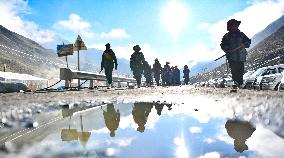
(240105) -- BEIJING, Jan. 5, 2024 (Xinhua) -- Soldiers of a border defense regiment patrol in Khunjerab, northwest China's Xinjiang Uygur Autonomous Region, April 13, 2023. The regiment is based on the Pamirs, guarding the China-Pakistan border and Khunjerab Port. With an average altitude of about 4,700 meters, the place is a "forbidden zone" for many people, as the temperature here can drop to as low as minus 40 degrees Celsius, and the oxygen content is less than half of that in the plain area. (Xinhua/Fei Maohua)

  •  

Chinese tea, incense culture captivates Egyptians

STORY: Chinese tea, incense culture captivates Egyptians SHOOTING TIME: Nov. 14, 2023 DATELINE: Nov. 16, 2023 LENGTH: 00:01:49 LOCATION: Cairo CATEGORY: CULTURE SHOTLIST: 1. various of immersive events promoting Chinese tea and incense culture 2. various of immersive events promoting Chinese music and instruments STORYLINE: A just-concluded immersive event promoting Chinese tea and incense culture has impressed Egyptian visitors in Egypt's capital of Cairo. Hosted by the Chinese Cultural Center in Cairo, the three-day Chinese Tea and Incense Salon concluding Tuesday offered a themed lecture, tea-tasting, and a demonstration of incense-burning and tea-making to help the locals know better about two iconic elements of the Chinese traditional lifestyle. The discovery and use of tea among the Chinese people is said to have started some 4,700 years ago. As a national beverage with numerous varieties, tea is involved in every facet of the Chinese way of life, not only for its rich aroma and flavors but an eleg

  •  
Anti-nuclear power rally in Tokyo

Anti-nuclear power rally in Tokyo

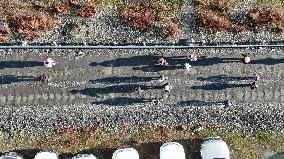
A rally against nuclear power plants is held in Tokyo on March 21, 2023, with about 4,700 people from across the nation marching in the Shibuya area for the annual event that started after the March 2011 nuclear crisis in Fukushima Prefecture.

  •  
Anti-nuclear power rally in Tokyo

Anti-nuclear power rally in Tokyo

A rally against nuclear power plants is held in Tokyo on March 21, 2023, with about 4,700 people from across the nation marching in the Shibuya area for the annual event that started after the March 2011 nuclear crisis in Fukushima Prefecture.

  •  
Anti-nuclear power rally in Tokyo

Anti-nuclear power rally in Tokyo

A rally against nuclear power plants is held in Tokyo on March 21, 2023, with about 4,700 people from across the nation marching in the Shibuya area for the annual event that started after the March 2011 nuclear crisis in Fukushima Prefecture.

  •  
U.S. Marines in Okinawa

U.S. Marines in Okinawa

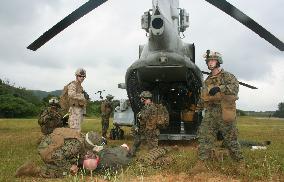
TOKYO, Japan - Members of the 31st U.S. Marine Expeditionary Unit conduct a rescue drill at Camp Hansen in Okinawa Prefecture in September 2010. On Feb. 6, 2012, Japan and the United States confirmed a policy to move about 4,700 U.S. Marines in Okinawa to Guam, delinking the troops' transfer from a plan to relocate the U.S. Marine Corps' Futenma Air Station within the prefecture, Japanese officials said.

  •  
U.S. Marines in Okinawa

U.S. Marines in Okinawa

TOKYO, Japan - Members of the U.S. Marine Corps arrive at the White Beach U.S. Naval facility in Uruma, Okinawa Prefecture, in April 2011, after taking part in Operation Tomodachi to support people affected by the March 2011 earthquake and tsunami in northeastern Japan. On Feb. 6, 2012, Japan and the United States confirmed a policy to move about 4,700 U.S. Marines in Okinawa to Guam, delinking the troops' transfer from a plan to relocate the U.S. Marine Corps' Futenma Air Station within the prefecture, Japanese officials said.

  •  
Atomic bomb memorial hall opens in Hiroshima

Atomic bomb memorial hall opens in Hiroshima

HIROSHIMA, Japan - Visitors look at the wall painting of the 1945 atomic bombing of Hiroshima at the Hiroshima National Peace Memorial Hall for the Atomic Bomb Victims that opened in the western Japan city on Aug. 1. The state-run facility houses more than 4,700 photographs of victims and a database of around 100,000 testimonies about survivors' experiences.

  •  
Lights go on in homes after two weeks of darkness

Lights go on in homes after two weeks of darkness

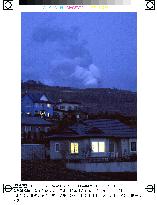
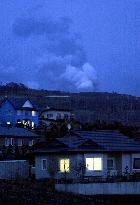
ABUTA, Japan - Lights go on again in homes in Abuta, southwestern Hokkaido, on April 13 two weeks after residents evacuated to shelters following the eruption of Mt. Usu on March 31. Earlier in the day, about 4,700 residents of the three municipalities closest to the volcano, including Abuta, were allowed to return home because of a partial lifting of evacuation orders. Smoke from the mountain can be seen in the background.

  •  
(InTibet)CHINA-TIBET-NAGQU-BIRU-CATERPILLAR FUNGI-HARVEST (CN)

(InTibet)CHINA-TIBET-NAGQU-BIRU-CATERPILLAR FUNGI-HARVEST (CN)

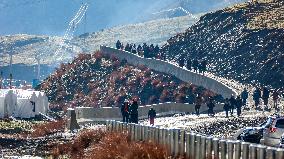
(220531) -- NAGQU, May 31, 2022 (Xinhua) -- People depart for caterpillar fungus collection in Lainqu Township, Biru County of Nagqu, southwest China's Tibet Autonomous Region, May 26, 2022. On the prairie of over 4,700 meters above sea level in Biru County, herdsmen are busy hunting down caterpillar fungus at the harvest time. Biru County is a key site of yielding caterpillar fungus, an expensive ingredient in traditional Chinese medicine. Found only at high altitudes, the fungus, known in China as "winter-worm summer-grass," is said to be effective in boosting the immune system. The caterpillar fungus harvest time lasts 45 days. For local herdsmen, collecting this precious fungus offers them seasonal jobs and increases their income. Trekking on the alpine ground, searching for the tiny caterpillar fungus as small as an apple stalk, fungus diggers must brave harsh weather conditions from sunrise till sunset. Fungus diggers use an ice pick to prod the earth and dig a hole about 10 centimeters de

  •  
(InTibet)CHINA-TIBET-NAGQU-BIRU-CATERPILLAR FUNGI-HARVEST (CN)

(InTibet)CHINA-TIBET-NAGQU-BIRU-CATERPILLAR FUNGI-HARVEST (CN)

(220531) -- NAGQU, May 31, 2022 (Xinhua) -- People depart for caterpillar fungus collection in Lainqu Township, Biru County of Nagqu, southwest China's Tibet Autonomous Region, May 26, 2022. On the prairie of over 4,700 meters above sea level in Biru County, herdsmen are busy hunting down caterpillar fungus at the harvest time. Biru County is a key site of yielding caterpillar fungus, an expensive ingredient in traditional Chinese medicine. Found only at high altitudes, the fungus, known in China as "winter-worm summer-grass," is said to be effective in boosting the immune system. The caterpillar fungus harvest time lasts 45 days. For local herdsmen, collecting this precious fungus offers them seasonal jobs and increases their income. Trekking on the alpine ground, searching for the tiny caterpillar fungus as small as an apple stalk, fungus diggers must brave harsh weather conditions from sunrise till sunset. Fungus diggers use an ice pick to prod the earth and dig a hole about 10 centimeters de

  •  
(InTibet)CHINA-TIBET-NAGQU-BIRU-CATERPILLAR FUNGI-HARVEST (CN)

(InTibet)CHINA-TIBET-NAGQU-BIRU-CATERPILLAR FUNGI-HARVEST (CN)

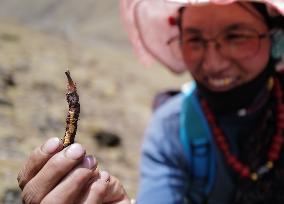
(220531) -- NAGQU, May 31, 2022 (Xinhua) -- Herdswoman Qime Garde shows a newly-harvested caterpillar fungus in Biru County of Nagqu, southwest China's Tibet Autonomous Region, May 25, 2022. On the prairie of over 4,700 meters above sea level in Biru County, herdsmen are busy hunting down caterpillar fungus at the harvest time. Biru County is a key site of yielding caterpillar fungus, an expensive ingredient in traditional Chinese medicine. Found only at high altitudes, the fungus, known in China as "winter-worm summer-grass," is said to be effective in boosting the immune system. The caterpillar fungus harvest time lasts 45 days. For local herdsmen, collecting this precious fungus offers them seasonal jobs and increases their income. Trekking on the alpine ground, searching for the tiny caterpillar fungus as small as an apple stalk, fungus diggers must brave harsh weather conditions from sunrise till sunset. Fungus diggers use an ice pick to prod the earth and dig a hole about 10 centimeters de

  •  
(InTibet)CHINA-TIBET-NAGQU-BIRU-CATERPILLAR FUNGI-HARVEST (CN)

(InTibet)CHINA-TIBET-NAGQU-BIRU-CATERPILLAR FUNGI-HARVEST (CN)

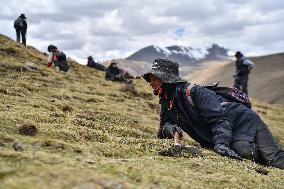
(220531) -- NAGQU, May 31, 2022 (Xinhua) -- Herdsmen hunt down caterpillar fungus in Biru County of Nagqu, southwest China's Tibet Autonomous Region, May 25, 2022. On the prairie of over 4,700 meters above sea level in Biru County, herdsmen are busy hunting down caterpillar fungus at the harvest time. Biru County is a key site of yielding caterpillar fungus, an expensive ingredient in traditional Chinese medicine. Found only at high altitudes, the fungus, known in China as "winter-worm summer-grass," is said to be effective in boosting the immune system. The caterpillar fungus harvest time lasts 45 days. For local herdsmen, collecting this precious fungus offers them seasonal jobs and increases their income. Trekking on the alpine ground, searching for the tiny caterpillar fungus as small as an apple stalk, fungus diggers must brave harsh weather conditions from sunrise till sunset. Fungus diggers use an ice pick to prod the earth and dig a hole about 10 centimeters deep. After plucking the fung

  •  
(InTibet)CHINA-TIBET-NAGQU-BIRU-CATERPILLAR FUNGI-HARVEST (CN)

(InTibet)CHINA-TIBET-NAGQU-BIRU-CATERPILLAR FUNGI-HARVEST (CN)

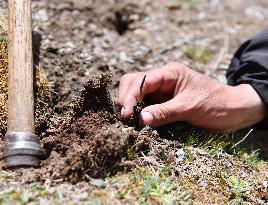
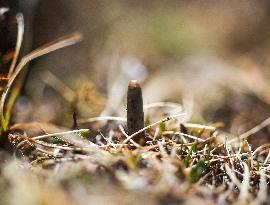
(220531) -- NAGQU, May 31, 2022 (Xinhua) -- A caterpillar fungus sprouts on the grassland in Biru County of Nagqu, southwest China's Tibet Autonomous Region, May 25, 2022. On the prairie of over 4,700 meters above sea level in Biru County, herdsmen are busy hunting down caterpillar fungus at the harvest time. Biru County is a key site of yielding caterpillar fungus, an expensive ingredient in traditional Chinese medicine. Found only at high altitudes, the fungus, known in China as "winter-worm summer-grass," is said to be effective in boosting the immune system. The caterpillar fungus harvest time lasts 45 days. For local herdsmen, collecting this precious fungus offers them seasonal jobs and increases their income. Trekking on the alpine ground, searching for the tiny caterpillar fungus as small as an apple stalk, fungus diggers must brave harsh weather conditions from sunrise till sunset. Fungus diggers use an ice pick to prod the earth and dig a hole about 10 centimeters deep. After plucking

  •  
(InTibet)CHINA-TIBET-NAGQU-BIRU-CATERPILLAR FUNGI-HARVEST (CN)

(InTibet)CHINA-TIBET-NAGQU-BIRU-CATERPILLAR FUNGI-HARVEST (CN)

(220531) -- NAGQU, May 31, 2022 (Xinhua) -- People rally before departing for caterpillar fungus collection in Lainqu Township, Biru County of Nagqu, southwest China's Tibet Autonomous Region, May 26, 2022. On the prairie of over 4,700 meters above sea level in Biru County, herdsmen are busy hunting down caterpillar fungus at the harvest time. Biru County is a key site of yielding caterpillar fungus, an expensive ingredient in traditional Chinese medicine. Found only at high altitudes, the fungus, known in China as "winter-worm summer-grass," is said to be effective in boosting the immune system. The caterpillar fungus harvest time lasts 45 days. For local herdsmen, collecting this precious fungus offers them seasonal jobs and increases their income. Trekking on the alpine ground, searching for the tiny caterpillar fungus as small as an apple stalk, fungus diggers must brave harsh weather conditions from sunrise till sunset. Fungus diggers use an ice pick to prod the earth and dig a hole about 1

  •  
(InTibet)CHINA-TIBET-NAGQU-BIRU-CATERPILLAR FUNGI-HARVEST (CN)

(InTibet)CHINA-TIBET-NAGQU-BIRU-CATERPILLAR FUNGI-HARVEST (CN)

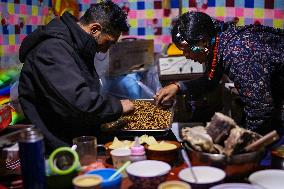
(220531) -- NAGQU, May 31, 2022 (Xinhua) -- Villagers arrange newly-harvested caterpillar fungi in Lainqu Township, Biru County of Nagqu, southwest China's Tibet Autonomous Region, May 25, 2022. On the prairie of over 4,700 meters above sea level in Biru County, herdsmen are busy hunting down caterpillar fungus at the harvest time. Biru County is a key site of yielding caterpillar fungus, an expensive ingredient in traditional Chinese medicine. Found only at high altitudes, the fungus, known in China as "winter-worm summer-grass," is said to be effective in boosting the immune system. The caterpillar fungus harvest time lasts 45 days. For local herdsmen, collecting this precious fungus offers them seasonal jobs and increases their income. Trekking on the alpine ground, searching for the tiny caterpillar fungus as small as an apple stalk, fungus diggers must brave harsh weather conditions from sunrise till sunset. Fungus diggers use an ice pick to prod the earth and dig a hole about 10 centimeter

  •  
(InTibet)CHINA-TIBET-NAGQU-BIRU-CATERPILLAR FUNGI-HARVEST (CN)

(InTibet)CHINA-TIBET-NAGQU-BIRU-CATERPILLAR FUNGI-HARVEST (CN)

(220531) -- NAGQU, May 31, 2022 (Xinhua) -- A caterpillar fungus sprout is seen on the grassland in Biru County of Nagqu, southwest China's Tibet Autonomous Region, May 25, 2022. On the prairie of over 4,700 meters above sea level in Biru County, herdsmen are busy hunting down caterpillar fungus at the harvest time. Biru County is a key site of yielding caterpillar fungus, an expensive ingredient in traditional Chinese medicine. Found only at high altitudes, the fungus, known in China as "winter-worm summer-grass," is said to be effective in boosting the immune system. The caterpillar fungus harvest time lasts 45 days. For local herdsmen, collecting this precious fungus offers them seasonal jobs and increases their income. Trekking on the alpine ground, searching for the tiny caterpillar fungus as small as an apple stalk, fungus diggers must brave harsh weather conditions from sunrise till sunset. Fungus diggers use an ice pick to prod the earth and dig a hole about 10 centimeters deep. After pl

  •  
Lights go on in homes after two weeks of darkness

Lights go on in homes after two weeks of darkness

ABUTA, Japan - Lights go on again in homes in Abuta, southwestern Hokkaido, on April 13 two weeks after residents evacuated to shelters following the eruption of Mt. Usu on March 31. Earlier in the day, about 4,700 residents of the three municipalities closest to the volcano, including Abuta, were allowed to return home because of a partial lifting of evacuation orders. Smoke from the mountain can be seen in the background.

  • Main
  • Top
  • Editorial
  • Creative
  • About Us
  • About ILG
  • Terms of use
  • Company
  • BEHIND
  • Price List
  • Single Plan
  • Monthly Plan
  • Services
  • Shooting
  • Rights Clearance
  • Support
  • FAQ
  • How To Buy
  • Contact Us
  • Become a Partner

© KYODO NEWS IMAGES INC

All Rights Reserved.

  • Editorial
  • Olympics
  • News
  • Sports
  • Japan
  • Tech
  • Royal
  • Disaster
  • NorthKorea
  • Old Japan
  • SNS

  • Creative
  • Food
  • Japan
  • Landscape
  • Animal
  • Popular
  • #Ukraine
  • #Thailand
  • #coronavirus
  • #N. Korea
  • #Russia
  • #China
  • #Ukraine
  • #Thailand
  • #coronavirus
  • #N. Korea
  • #Russia
  • #China
  • Food
  • Japan
  • Landscape
  • Animal
  • Olympics
  • News
  • Sports
  • Japan
  • Tech
  • Royal
  • Disaster
  • NorthKorea
  • Old Japan
  • SNS